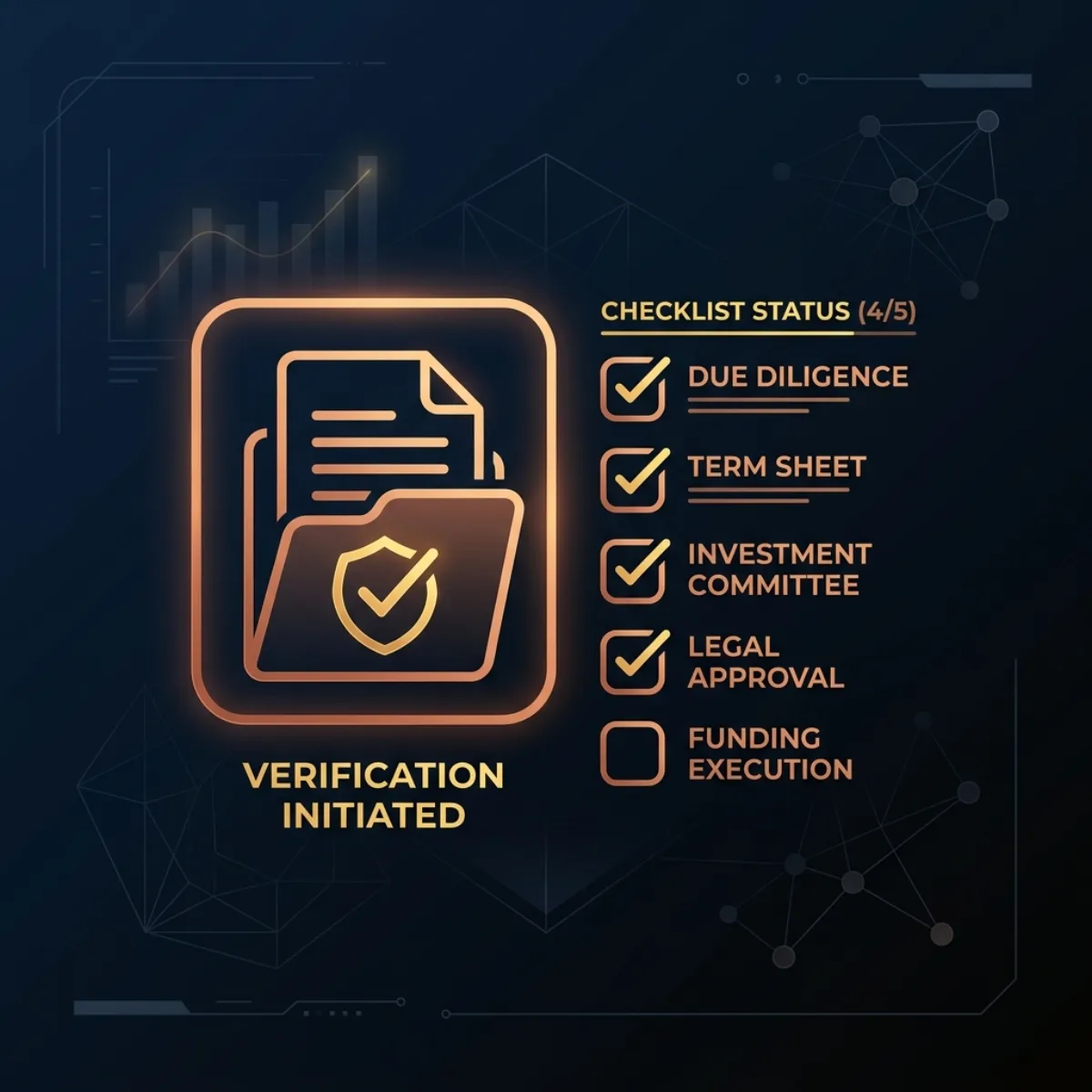
To secure the UK Innovator Founder Visa in 2026, you must satisfy both the statutory business criteria and the strict personal eligibility checks set by the Home Office. Failing to supply even a single mandatory document can lead to an immediate rejection. This checklist covers all requirements for 2026.
1. Deep Statutory Analysis of the Three Pillars
The cornerstone of the UK Innovator Founder Visa is the business concept itself. Unlike standard work permits, your visa is tied to the endorsement of a specific business venture. The Home Office has legislated that this venture must satisfy three core statutory pillars: Innovation, Viability, and Scalability. Understanding how endorsing bodies evaluate these pillars is the difference between a successful application and a rejection.
Innovation: The endorsing body must be satisfied that your business plan represents a genuine, original business model. It must meet new or existing market needs and create a clear competitive advantage. A basic consultancy, agency, or template SaaS clone will be rejected immediately. You need to outline a technological moat. For example, if you are building an e-commerce platform, you cannot simply use a standard Shopify setup. You must prove that you have developed custom API pipelines, proprietary inventory forecasting algorithms, or specialized recommendation systems that offer a distinct, non-obvious advantage.
Viability: Assessors look for evidence that you possess the technical, operational, and commercial skills to execute the plan. You must demonstrate that you are the active driver of the venture. This is best proven by presenting a functional MVP or high-fidelity prototype rather than just a slide deck. The panel will scrutinize your professional background. If you are proposing a complex Tech-driven health tech platform but have no medical or machine learning credentials, and no technical team, you will fail the viability test. You must demonstrate how the skills gap is bridged.
Scalability: Your plan must prove a pathway to national and international growth. Your financials must show structured planning, growing unit economics, and the capacity to create jobs. Specifically, the endorsing body wants to see that your venture has the potential to hire at least 2 settled UK workers in professional, full-time roles by Month 36.
2. The Endorsement Dossier Requirements
Before you can apply for the visa itself, you must submit a comprehensive dossier to your chosen endorsing body. This package is the ultimate test of your venture's viability and structure. The dossier must contain the following components:
- Dossier Cover Sheet: Summarizing your company profile, shareholder percentages, and contact details of all co-founders.
- Endorsement-Ready Business Plan: A 30 to 45-page document outlining your market analysis, technological innovation, Go-To-Market (GTM) model, operational milestones, and 3-year financial forecasts.
- Functional Prototype or MVP: Figma wireframes, interactive user flows, or a live software demo proving that your product is viable and ready for testing.
- Intellectual Property & R&D Strategy: Documents detailing how you will protect your code, data models, or hardware designs (e.g. patent search documents or copyright registries).
3. Statutory Personal Eligibility Documents
Once you receive your endorsement letter, you must submit the following personal documents to the Home Office. The Home Office verifies your background, English competency, financial stability, and medical status.
- Valid International Passport: With at least one blank page for your entry vignette and validity extending at least 6 months past your travel date.
- Approved Endorsement Letter: Must be dated within the last 3 months and not withdrawn by the issuing endorsing body.
- English Language Proficiency: Evidence at CEFR Level B2. This must be either an ECCTIS certificate verifying degree equivalence or a valid SELT test report from an approved provider (e.g. IELTS Consortium or Pearson PTE).
- Maintenance Funds Statement: Bank statements showing you have held at least £1,270 in personal savings for 28 consecutive days before applying. The bank must be approved by the Home Office.
- Tuberculosis Test Certificate: A valid clearance certificate issued by an approved clinic under the International Organisation for Migration (IOM) guidelines (mandatory for residents of India, UAE, and other listed countries).
- Criminal Record Certificate: A police clearance certificate from any country you have lived in for 12 months or more during the past 10 years.
4. The Maintenance Funds Rules Decoded
One of the most frequent reasons for visa refusal at the Home Office stage (after endorsement has been secured) is a failure to meet the maintenance requirements. The rules are strict and leave no room for administrative error.
The 28-Day Holding Period: You must prove you have at least £1,270 in personal savings. This money must have been in your account for a consecutive 28-day period. The balance must never drop below £1,270 by even a single penny during this window. If your balance drops to £1,269.99 at any point, the 28-day clock resets.
Bank Whitelists: The Home Office maintains a list of approved financial institutions in specific countries (such as India). If your funds are held in an institution that is not on the whitelisted directory, your statement will be rejected. High-street banks like ICICI, HDFC, SBI, Axis, and Kotak are whitelisted. Cooperative banks, regional rural banks, and non-banking financial companies (NBFCs) are blacklisted.
Statement Format: The statement must be printed on official bank stationery, containing the bank's logo, your name, account number, and contact details. Every page of the statement must be stamped and signed by a bank official. The statement must be dated within 31 days of the date you submit your online visa application.
5. Document Matrix & Verification Timelines
Planning your document collection is critical to avoid delays. The following matrix details the typical timelines, validity, and potential gotchas for the most critical personal documents:
| Document Name | Issuing Authority | Standard Turnaround | Validity Period | Critical Gotchas |
|---|---|---|---|---|
| ECCTIS Certificate | ECCTIS UK | 10 – 15 working days | Lifetime validity | Requires university letter confirming English medium of instruction. |
| TB Medical Clearance | IOM Approved Clinics | 1 – 3 working days | 6 months | Slots fill fast during peak periods. Sputum tests take 8-12 weeks if requested. |
| Maintenance Statement | Whitelisted Banks | Immediate (printed in branch) | 31 days from statement date | Must show exactly 28 days of holdings. Must be signed and stamped on every page. |
| Police Clearance (PCC) | National Police Authority | 7 – 21 working days | 6 months | Required for every country where you resided for 12+ months in the last 10 years. |
6. The Post-Endorsement Compliance Audits
Securing your visa is not the final step. Under the Home Office guidance, endorsing bodies must conduct formal checkpoints at Month 12 and Month 24. These checkpoints verify that you are:
- Actively Directing the Venture: Proving you are working full-time on your startup and not employed elsewhere (except as permitted under the rules).
- Making Progress Against Milestones: Showing that you have completed company registration, opened a business bank account, developed your product, and achieved early GTM traction.
- Meeting Compliance Rules: Providing updated Companies House filings, HMRC payroll summaries, and bank transaction lists.
If your business plan pivots, you must notify your endorsing body immediately. They will assess whether the new direction still satisfies the Innovation, Viability, and Scalability criteria. Failing to attend a checkpoint or failing to prove active management will lead to your endorsement being withdrawn and your visa curtailed.
7. Step-by-Step Document Submission Roadmap
To avoid processing delays, follow this structured steps roadmap:
- Week 1-2: Apply to ECCTIS if using a degree taught in English. If you do not have a degree, book your Secure English Language Test (SELT) at an approved center.
- Week 3-4: Setup a dedicated bank account in a whitelisted bank and deposit the £1,270 maintenance funds. Do not touch these funds for the next 28 days.
- Week 5-6: Book your Tuberculosis screening appointment at an IOM-approved clinic. Gather your Police Clearance Certificates (PCC) from all relevant national police registries.
- Week 7-8: Submit your business plan and prototype dossier to the Endorsing Body. Complete the video panel interview and receive your endorsement letter.
- Week 9-10: Complete the Home Office online visa application. Pay the visa fee and the Immigration Health Surcharge (IHS). Book your biometrics appointment at the nearest VFS Global center.
- Week 11-12: Attend your biometrics appointment. Submit your physical passport and document checklist. Wait for your entry vignette to be processed.
Building Something That Needs to Last?
Junagal partners with operator-founders to build Tech-native companies with permanent ownership and no exit pressure.